
Your Arabic AI is only as good as the humans who train it.
91% accuracy, benchmarked against published research. US-incorporated. No shortcuts.
Veterans
Why Arabic? Why Now?
Arabic is one of the most spoken languages on earth — and one of the most underserved in AI. That gap is why enterprise buyers are reaching out, and why the quality of annotation data has never mattered more.
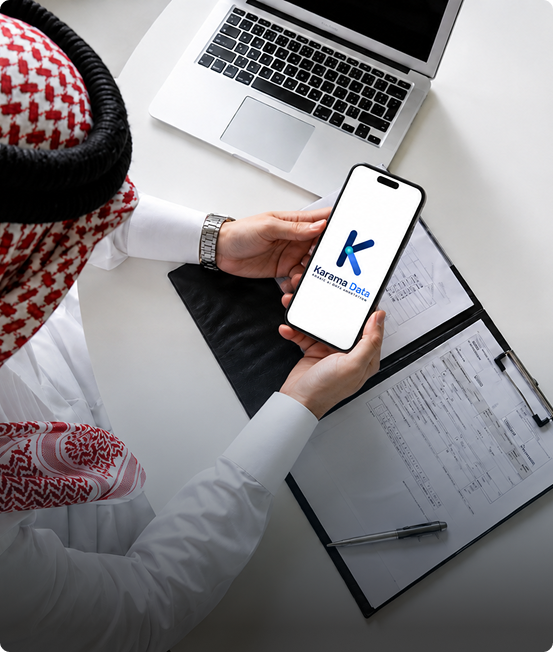
Arabic is the fifth most spoken language in the world, spanning 22 countries across the Middle East and North Africa — yet AI systems routinely fail to understand the people who speak it.
Despite hundreds of millions of speakers, Arabic receives a fraction of the research attention that English does. The training data infrastructure is just getting started — and the companies who invest now will have a significant head start.
Most "Arabic" AI training data is machine-translated English. It misses cultural context, dialect nuance, and the way Arabic is actually spoken day to day.
Models trained on Modern Standard Arabic sound robotic to real users who speak Levantine, Khaleeji, Egyptian, or Maghrebi every day. Dialect matters.
Quality We Can Prove
In our first structured pilot, two Palestinian annotators in Gaza completed 3,031 annotation tasks across three task types — every result benchmarked against published international standards.
Preference Ranking
Above BenchmarkDialect Identification
On ParSentiment Tagging
Near TargetArabic Dialect Annotation Services
We specialize exclusively in Arabic language data annotation — covering major dialect families — for organizations building the next generation of Arabic-language AI systems.
NLP Annotation
Native dialect labels that improve your model's real-world accuracy.
Named entity recognition, sentiment analysis, intent classification, and text categorization across Levantine, Gulf, Egyptian, and Maghrebi dialects.
ASR Data Annotation
Speech models that actually understand how Arabic is spoken, not just written.
Speech transcription, phonetic labeling, speaker diarization, and audio quality validation for Arabic automatic speech recognition training pipelines.
RLHF & Preference Ranking
Key CapabilityHuman feedback data that makes your Arabic LLM safer, more helpful, and culturally aligned.
Response ranking, preference pair collection, and reinforcement learning from human feedback (RLHF) data — delivered by native Arabic speakers who understand dialect nuance and cultural context.
Conversational AI
Chatbot training data that feels natural to real Arabic speakers, not translated English.
Dialogue annotation, response ranking, and conversation flow labeling for Arabic-language chatbots and virtual assistants.
Quality Assurance
Documented QA reports with every delivery — no black-box quality claims.
Multi-layer review with inter-annotator agreement measurement, senior reviewer sign-off, and structured QA reporting delivered with every project.
Enterprise Compliance
A vendor your procurement team can approve on the first pass.
US-incorporated, domestically owned. No content moderation work. Structured data handling with privacy-first practices that meet enterprise procurement requirements.
We price for quality, not volume. Engagements are scoped based on dialect requirements, QA depth, and throughput needs — not race-to-the-bottom per-task rates. Contact us to discuss your project.
Built for Enterprise Trust
Karama Data is a US-incorporated LLC with domestic ownership and a leadership team with deep expertise in AI, enterprise technology, and regional operations.
Our Structure
We are a US LLC with US-based board leadership and domestic ownership — a structure that meets enterprise compliance requirements and instills client confidence. Our operational presence is in the region, giving us authentic access to the linguistic talent our clients need.
GCV Partnership
We operate in partnership with Gaza Children Village (GCV), providing operational infrastructure and community ties that allow us to build and retain a stable, highly-qualified annotator workforce.
Leadership
The Quality Starts With the Annotators
Our annotator workforce is our primary quality asset. We invest in their training, their ownership stake, and their stability — because high-quality annotations require a workforce that is both skilled and retained.
Worker privacy is a priority. We do not publish individual annotator names, photos, or location information.
Our annotators are not vendors — they are deeply invested in the outcomes. That changes everything about how they approach the work. The precision, the care, the accountability. It shows in every dataset we deliver.
Start Your Project
Tell us about your project. We'll follow up to discuss scope, dialect requirements, QA standards, and how we can fit into your annotation pipeline.